Nashville, Tennessee, 20th March 2026, ZEX PR WIRE, Families across Music City are invited to celebrate Easter together as the Church of Scientology Nashville hosts a festive community Easter Egg Hunt on Sunday, April 5, beginning at 11:00 a.m.
The event is open to all and designed as a joyful morning where children can dash, discover, and delight in a classic Easter tradition—hunting for colorful eggs hidden across the grounds. With special surprises tucked among the eggs, every child will have the chance to share in the excitement.
In addition to the egg hunt, families can enjoy a variety of activities throughout the morning, creating a lively and welcoming atmosphere for guests of all ages. The event is part of the Church’s ongoing effort to bring the community together through family-friendly celebrations that foster connection, goodwill, and fun.
The Church of Scientology Nashville has become a gathering place for community events and cultural celebrations throughout the year, welcoming neighbors from all walks of life. From seasonal festivities to open houses and humanitarian initiatives, the Church provides a space where individuals and families can come together in a spirit of unity and shared purpose.
“Our goal is simply to create a place where families can enjoy time together and build lasting memories,” said a representative of the Church. “Events like this Easter egg hunt are about bringing people together and celebrating the values we all share—joy, community, and kindness.”
The Easter Egg Hunt will take place at the Church of Scientology Nashville, located at 1130 8th Avenue South. Admission is free, and all are welcome to attend.
For more information about this event or other upcoming activities, visit the Church of Scientology Nashville or stop by for a visit.
Anthony Helinski, a Salem, New Hampshire educator and engineer, argues that practical, hands-on instruction produces more durable outcomes than abstract curriculum alone.
The Problem With Learning That Stays on Paper
New Hampshire, US, 20th March 2026, ZEX PR WIRE, After seven years teaching science and reading at Lawrence Public Schools in Lawrence, Massachusetts, Anthony Helinski developed a clear view of what separates students who retain information from those who do not. Inquiry-based learning, hands-on problem solving, and real-world application consistently outperformed passive instruction. The students who built things, tested things, and handled real materials in the classroom were the students who came back to class asking questions.
Helinski’s method was not accidental. It was the result of deliberate design, informed by his training in universal design for learning and his instinct for matching instruction to the learner rather than the learner to the instruction.
What Hands-On Learning Actually Requires
Practical instruction requires investment, and Helinski has never been reluctant to make that case. During his time in Andover, Massachusetts as an engineering and design teacher, he ran a civil engineering club and a woodworking club after school hours. He designed lessons around robotics, rocketry, and ergonomics. He created the conditions for students to encounter real problems and work toward real solutions.
The same philosophy informed his later work in the utility sector, where he developed onboarding and operator qualifications curriculum for Progressive Pipeline Management, a specialized pipelining company serving major east coast gas utilities. The principles carried over. Clear objectives, tested methods, iterative improvement.
Four Trends Shaping How People Learn in 2026
In a piece recently published by Barchart, Helinski outlined key shifts in how learning, work, and creation are evolving. His perspective draws on both classroom experience and field engineering, producing analysis grounded in practice rather than theory.
Helinski has also been featured in Brainz Magazine and AccessNewswire discussing the importance of returning to practical problem-solving frameworks in educational settings. His view is consistent: learning that cannot be applied has limited value, and the gap between academic instruction and real-world competency is a structural problem worth addressing directly.
What Educators and Learners Can Do Right Now
Helinski’s recommendation is to begin with the simplest version of hands-on engagement available in your current environment. Identify one concept in your curriculum or training program that could be demonstrated physically rather than described verbally. Build the demonstration before refining it. Test whether understanding improves. Iterate from there.
The engineering design process does not require expensive equipment. It requires a clear question, a method for testing answers, and a willingness to revise based on what you learn.
Take one concept you currently teach or train abstractly and find a way to make it physical this week. Note the difference in engagement and ask whether the outcome improved.
About Anthony Helinski
Anthony Helinski is a Salem, New Hampshire-based educator, project engineer, and woodworking entrepreneur. He holds two master’s degrees from Lesley University and spent seven years teaching science and reading at Lawrence Public Schools before transitioning to engineering design instruction and gas utilities project management. He is the founder of Helinski Custom Woodworking and can be reached through anthonyhelinski.com.
Australia, 20th Mar 2026 – Homeowners and businesses across the Mornington Peninsula now have a dependable partner for all roofing needs with TMR Roof Plumber Mornington, a leading provider of professional roof plumbing and repair services. Known for its commitment to quality workmanship, fast response times, and customer satisfaction, the company continues to set a high standard for roofing solutions in the region.
Conveniently located at 90 Main St, Mornington, VIC 3931, TMR Roof Plumber Mornington has built a strong reputation as a go-to roof plumber mornington expert. Whether it’s a minor leak, major storm damage, or a complete roof restoration, the team brings years of hands-on experience and industry knowledge to every project.
Roofing issues can arise unexpectedly, often leading to costly damage if left unaddressed. TMR Roof Plumber Mornington understands the urgency of such situations and provides prompt, reliable services to ensure properties remain safe and protected. Specializing in roof repairs mornington, the company offers tailored solutions designed to extend the lifespan of roofs while maintaining structural integrity and aesthetic appeal.
“Our mission is to provide top-quality roofing services that customers can rely on,” said a spokesperson for TMR Roof Plumber Mornington. “We take pride in delivering workmanship that not only meets but exceeds expectations, ensuring long-term peace of mind for our clients.”
Serving both residential and commercial clients, the company’s comprehensive range of services includes leak detection, gutter installation and maintenance, flashing repairs, roof restorations, and more. Their expertise in roof repairs mornington peninsula ensures that properties across the region are well-equipped to handle Australia’s unpredictable weather conditions.
What sets TMR Roof Plumber Mornington apart is its customer-first approach. Every project begins with a thorough inspection, followed by clear communication and transparent pricing. Clients are kept informed throughout the process, ensuring confidence and satisfaction from start to finish.
In addition to repairs, the company is also recognized as a trusted roof plumber mornington peninsula, offering expert roof plumbing solutions that enhance drainage, prevent water damage, and improve overall roof performance. By using high-quality materials and proven techniques, the team ensures durable and efficient results.
Energy efficiency is another key focus for the company. With rising energy costs, proper insulation has become more important than ever. TMR Roof Plumber Mornington provides professional roof insulation mornington peninsula services, helping property owners improve thermal efficiency, reduce energy bills, and create more comfortable indoor environments year-round.
As a locally owned and operated business, TMR Roof Plumber Mornington understands the unique needs of the Mornington Peninsula community. Their deep knowledge of local building styles and environmental conditions allows them to deliver customized solutions that stand the test of time.
The company’s dedication to excellence is reflected in its growing base of satisfied customers and positive word-of-mouth referrals. By consistently delivering high-quality results, TMR Roof Plumber Mornington has established itself as a trusted name in the roofing industry.
About TMR Roof Plumber Mornington
TMR Roof Plumber Mornington is a professional roofing company based in Mornington, Victoria, specializing in roof plumbing, maintenance, and repair services. With a strong focus on quality, reliability, and customer satisfaction, the company serves residential and commercial clients throughout the Mornington Peninsula. Their team of skilled and experienced professionals is committed to delivering durable, cost-effective solutions tailored to each client’s needs. From emergency repairs to complete roof restorations and insulation services, TMR Roof Plumber Mornington continues to be a trusted choice for dependable roofing solutions.
For those seeking reliable and professional roofing services, TMR Roof Plumber Mornington offers a seamless experience backed by expertise, integrity, and a commitment to customer satisfaction.
Strengthening Regional Economic Diplomacy and Expanding International Investment Pathways Across the Caribbean
Belize, 20th Mar 2026 – Dr. Luigi Wewege and Dustin Rennie have officially become members of the prestigious Caribbean Council in 2026, reinforcing Belize’s growing influence within regional economic diplomacy and international investment circles.
Membership in the Caribbean Council represents far more than a networking opportunity. It is a strategic platform that serves as a bridge between the Caribbean private sector, international investors, and government policymakers. Council members play an active role in shaping policy discussions, promoting responsible foreign direct investment (FDI), and strengthening the Caribbean’s position as a unified and competitive economic bloc.
As members, Dr. Wewege and Rennie join a collective voice representing the Caribbean business community at the highest levels. The Council facilitates direct engagement with senior government officials to address key economic priorities, including:
Trade Barriers: Reducing administrative and regulatory obstacles that impede cross-border commerce and international partnerships.
Regulatory Frameworks: Advising on legislative and compliance structures that influence investment flows and private sector development.
Economic Stability: Advocating for sustainable growth strategies in critical sectors such as tourism, real estate, financial services, and infrastructure.
Their appointment provides Belize with enhanced visibility and credibility on the international stage. Participation in the Council lends an international “stamp of approval” to projects originating in Belize, signaling institutional alignment, strategic oversight, and long-term growth potential to global capital providers.
Through Council membership, Dr. Wewege and Rennie gain access to an influential ecosystem that includes:
Institutional Investors: Facilitating introductions between Caribbean projects and global capital allocators.
Multilateral Organizations: Engaging with institutions such as the Caribbean Development Bank (CDB) and the Inter-American Development Bank (IDB) on regional development initiatives.
Diplomatic Channels: Building relationships with High Commissions and Embassies to streamline cross-border transactions and enhance economic cooperation.
Importantly, Council members benefit from a “first-look” advantage. This includes in-depth briefings on emerging economic trends, early insight into upcoming infrastructure projects, and awareness of legislative developments across the region. It also provides a respected platform to share their own expertise.
Dustin Rennie brings extensive on-the-ground knowledge of Belizean land value dynamics, property development strategy, and regional investment structuring. Dr. Luigi Wewege contributes deep expertise in international finance, cross-border banking, correspondent banking relationships, and digital financial transformation, insights particularly relevant as Caribbean economies continue modernizing their financial ecosystems.
The Caribbean Council approaches the region as a unified economic bloc. For a Belize-based member, this means actively promoting CARICOM interests while positioning Belize not merely as a “hidden gem,” but as a primary destination for serious international developers and institutional investors. By sharing best practices from leading regional economies such as Barbados and Jamaica, Council members help elevate governance standards, investment transparency, and long-term resilience.
The appointment of Dr. Wewege and Rennie reflects a broader commitment to advancing sustainable economic growth, strengthening policy dialogue, and reinforcing Belize’s role within the evolving Caribbean economic architecture.
The post Dr. Luigi Wewege and Dustin Rennie Join the Caribbean Council in 2026 appeared first on King Newswire. This content is provided by a third-party source.. King Newswire makes no warranties or representations in connection with it. King Newswire is a press release distribution agency and does not endorse or verify the claims made in this release. If you have any complaints or copyright concerns related to this article, please contact the company listed in the ‘Media Contact’ section
Bukhara, Uzbekistan- As blockchain technology continues to evolve, one issue remains at the center of industry discussions: trust.
While cryptocurrencies were originally designed to eliminate intermediaries and increase transparency, many projects today still struggle to deliver on that promise in a meaningful way. Hidden allocations, unclear fund usage, and lack of accountability have left users demanding more than just innovation—they want verifiable integrity.
This is where Solicoin (SOLI) introduces a compelling shift.
The Trust Problem in Modern Crypto
Despite rapid adoption, the crypto space faces a critical challenge: bridging the gap between decentralization and real-world reliability.
Users today are no longer satisfied with:
Vague roadmaps
Unverified claims
Centralized control disguised as decentralization
Instead, they are looking for ecosystems where every transaction, allocation, and movement of value can be traced and validated.
Solicoin is built around addressing exactly this gap.
A Transparency-First Approach
At its foundation, Solicoin leverages blockchain technology to create an environment where financial activity is not just decentralized—but accountable.
This includes:
On-chain tracking of transactions, ensuring visibility at every level
Structured fund allocation systems, reducing ambiguity
Security-focused wallet mechanisms, enhancing user confidence
Rather than positioning transparency as a feature, Solicoin treats it as a core principle of its ecosystem.
Connecting Blockchain With Real-World Use
One of the most notable aspects of Solicoin is its focus on bridging digital finance with real-world application.
Instead of remaining confined within the crypto ecosystem, the project is building toward:
Everyday payment integration
Cross-border financial accessibility
User-friendly platforms for broader adoption
This approach reflects a growing trend in the industry—moving beyond isolated blockchain systems into practical, usable financial infrastructure.
The Role of Purpose in Adoption
Another defining element of Solicoin is its purpose-driven foundation.
In an environment where many tokens are launched purely for market momentum, projects that align with real-world narratives and meaningful use cases tend to build stronger communities and longer-lasting engagement.
Purpose adds a new dimension to blockchain adoption:
It increases user trust
Strengthens community alignment
Encourages long-term participation over short-term speculation
Solicoin leverages this dynamic to create a model where technology and purpose work together—not separately.
IEO as a Gateway to Early Participation
Currently, Solicoin is in its Initial Exchange Offering (IEO) phase on P2PB2B, providing early access through a structured and exchange-backed environment.
This stage plays a crucial role in the project’s growth, allowing participants to engage before wider market exposure while benefiting from a more streamlined and accessible entry process.
For many investors, this phase represents an opportunity to align early with projects that are still in their expansion stage.
A Shift Toward Accountable Ecosystems
The broader crypto market is evolving toward a new standard—one where success is no longer defined solely by price performance, but by:
Transparency
Usability
Long-term sustainability
Real-world relevance
Projects that fail to meet these expectations are increasingly being filtered out by more informed participants.
Solicoin positions itself within this new wave, focusing on building an ecosystem that is both functional and accountable.
Looking Ahead
As blockchain adoption continues to expand globally, the projects that will define the next phase of growth are those that successfully combine:
Technology
Trust
Real-world integration
Solicoin represents an early example of this shift—offering a framework where blockchain is not just innovative, but practical and transparent in its application.
Final Thoughts
The future of crypto is not just about decentralization—it’s about credibility.
In a space where users are becoming more selective and informed, projects like Solicoin stand out by addressing one of the most important needs in the industry: trust backed by technology.
Rather than following trends, Solicoin is contributing to a broader transformation—one where blockchain evolves into a system that users can rely on, not just invest in.
Disclaimer: This article is for informational purposes only and does not constitute financial advice. Cryptocurrency investments carry risk, including total loss of capital. All market analysis and token data are for informational purposes only and do not constitute financial advice. Readers should conduct independent research and consult licensed advisors before investing.
New York, United States, 20th Mar 2026 – As Easter approaches, a season of renewal and reflection, interest in faith and spiritual practices continues to grow. In response, FaithTag has introduced the FaithTag Bible Printer—a compact, ink-free device designed not just as a piece of technology, but as a dedicated companion for spiritual growth, Bible journaling, and family devotion.
For those looking to move beyond digital scrolling and cultivate a tangible, creative relationship with God’s Word, the FaithTag Bible Printer emerges as a standout recommendation in this year’s Easter gift guide.
Creativity as Worship: A New Approach to Devotion
At its core, FaithTag operates on a simple yet profound belief: creativity can be worship. In a noisy world, the FaithTag Bible Printer serves as a gentle invitation to pause and engage deeply with Scripture.
“To us, an image is just a tool, like a small key that opens a door,” said Zipeg, product manager of FaithTag. “Beyond that door lies what’s truly precious: the unchanging truth of God.”
The device allows users to instantly print daily Scripture verses, devotional reflections, and intricate Bible-themed designs directly into their Bible margins or prayer journals. By transforming digital inspiration into physical, creative expressions, it helps ensure that God’s Word sinks deep into the heart, making daily Bible study an interactive and joyful experience rather than a routine task.
Bridging Personal Reflection and Family Faith
The FaithTag Bible Printer is thoughtfully designed to support multiple facets of the Christian walk:
Personal Bible Journaling: With access to a continuously updated library of over 3,000 Bible-themed images and design elements, users can easily illustrate their reflections, create personalized study notes, or focus on specific Bible character studies.
Family Interaction & Sunday School: The ink-free, thermal printing technology makes it incredibly safe and easy for children to use. It’s an engaging tool for children’s Sunday School activities or family devotional time, helping younger generations visualize and connect with biblical stories.
Meaningful Christian Gifting: Its elegant, minimalist design makes it a beautiful addition to any desk or study space. For Easter, baptisms, or confirmations, printing a customized verse or prayer transforms a simple gift into a profound expression of faith.
Designed for the Devotional Lifestyle
While its purpose is deeply spiritual, the FaithTag Bible Printer is supported by thoughtful, user-friendly engineering designed to seamlessly integrate into daily life.
It utilizes a portable 2-inch format that is perfectly sized for Bible margins. The device features 300 DPI grayscale printing, ensuring that text remains crisp and visual elements are beautifully rendered without the need for messy ink cartridges. Its compact and quiet operation means it can be used anywhere—from a quiet morning at the kitchen table to a bustling church small group.
An Intentional Easter Gift
This Easter, the FaithTag Bible Printer is introduced as a gift option designed to support spiritual practices. It is an investment in someone’s daily walk with God, providing a creative bridge that first draws people in, and then leads them to Scripture.
For the Easter season, the FaithTag Bible Printer is available for a special promotional price with 5% off (regularly $79.99).
To explore the world’s growing library of Scripture-based visuals and discover how creativity can enhance devotional life, visit theFaithTag Official Store orAmazonto get more information.
Tech Specs
Print Technology: Direct Thermal (Ink-free)
Resolution: 300 DPI
Format: Portable 2-inch format (perfect for Bible margins)
FaithTag is a creative, faith-based brand dedicated to helping believers bring Scripture into everyday life. Driven by the vision that creativity is a form of worship, FaithTag develops tools and visual resources to support Bible journaling, family faith practices, and meaningful Christian living. The brand’s vision is to build a comprehensive library of Scripture-based visuals and become a creative devotional companion for Christian homes worldwide.
The post FaithTag introduces Bible Printer for Easter Season Gift Guide appeared first on King Newswire. This content is provided by a third-party source.. King Newswire makes no warranties or representations in connection with it. King Newswire is a press release distribution agency and does not endorse or verify the claims made in this release. If you have any complaints or copyright concerns related to this article, please contact the company listed in the ‘Media Contact’ section
Australia, 20th Mar 2026 – First Class Demolition, a trusted name in the demolition and excavation industry, is proud to announce the expansion of its award-winning services into the thriving city of Greater Geelong. With a strong reputation for safety, efficiency, and high-quality workmanship, the company is now bringing its comprehensive solutions to meet the growing demand for reliable demolition services in the region.
Located at 72 Gheringhap St, Geelong VIC 3220, First Class Demolition is strategically positioned to serve residential, commercial, and industrial clients throughout Greater Geelong and surrounding areas. The company’s expansion reflects its commitment to supporting local development projects while maintaining the highest standards in the industry.
As a leading demolition company Geelong, First Class Demolition offers a wide range of services tailored to suit projects of all sizes. From small residential jobs to large-scale commercial demolitions, the company combines modern equipment with a skilled team to ensure every project is completed safely, on time, and within budget.
“Our expansion into Greater Geelong is an exciting milestone for our team,” said a spokesperson for First Class Demolition. “We’ve built our reputation on delivering dependable, high-quality demolition services, and we’re eager to bring that same level of excellence to clients in Geelong. The region is growing rapidly, and we’re here to support that growth with professional and efficient solutions.”
The company specializes in house demolition Geelong, offering homeowners a seamless and stress-free experience when preparing sites for new construction. From initial assessment to final site clearance, First Class Demolition ensures every stage is handled with precision and care. Their team works closely with clients to understand their needs and provide customized solutions that align with project goals.
In addition to demolition, the company is also recognized for its expertise in excavation Geelong. These services are essential for preparing land for construction, landscaping, and infrastructure development. By utilizing advanced machinery and proven techniques, First Class Demolition delivers accurate and efficient excavation services that set the foundation for successful projects.
What sets First Class Demolition apart as a top demolition contractor Geelong is its unwavering commitment to safety and environmental responsibility. The company adheres to strict safety protocols and industry regulations to protect both workers and the surrounding community. Furthermore, it actively promotes sustainable practices by recycling materials whenever possible and minimizing environmental impact.
Clients can also expect clear communication and transparency throughout every project. From providing detailed quotes to maintaining consistent updates, First Class Demolition prioritizes customer satisfaction at every step. This client-focused approach has earned the company numerous accolades and a loyal base of satisfied customers.
The expansion comes at a time when Geelong is experiencing significant growth in both residential and commercial development. As new projects continue to emerge, the need for reliable demolition Geelong services has never been greater. First Class Demolition is well-equipped to meet this demand, offering dependable solutions that help bring new developments to life.
With its proven track record, experienced team, and dedication to excellence, First Class Demolition is poised to become a leading force in the Greater Geelong demolition industry. The company invites homeowners, builders, and developers to explore its full range of services and discover why it is a preferred choice for demolition and excavation projects.
For more information, visit demolitiongeelong.com.au , call 0483 941 860, or email info@demolitionsgeelong.com.au.
About First Class Demolition First Class Demolition is a professional demolition and excavation company known for delivering safe, efficient, and high-quality services. With a strong focus on customer satisfaction and environmental responsibility, the company provides tailored solutions for residential, commercial, and industrial projects. Now expanding into Greater Geelong, First Class Demolition continues to set the standard for excellence in the industry.
The post First Class Demolition Expands Award-Winning Services into Greater Geelong appeared first on King Newswire. This content is provided by a third-party source.. King Newswire makes no warranties or representations in connection with it. King Newswire is a press release distribution agency and does not endorse or verify the claims made in this release. If you have any complaints or copyright concerns related to this article, please contact the company listed in the ‘Media Contact’ section
United States, 20th Mar 2026 – WeekPlan, a leading productivity and time management platform, is proud to announce the upcoming launch of an innovative feature called Ideal Week, designed to help users plan their weeks more intentionally by organizing time around the life roles that matter most.
In today’s fast-paced world, managing time effectively can be a challenge. Many individuals struggle to maintain a healthy balance between work, personal life, and hobbies. With the Ideal Week feature, WeekPlan empowers users to take control of their schedules by creating a structured weekly framework that prioritizes what truly matters.
Introducing Ideal Week: Planning with Purpose
Unlike traditional scheduling tools that focus solely on tasks and meetings, Ideal Week allows users to define recurring time slots for different life roles, such as work, family, health, hobbies, or personal growth. By visualizing these priorities, users can intentionally allocate time to the activities that align with their values and goals.
For instance, a user might set up their ideal week as follows:
08:00 – 16:00: Work
16:00 – 18:00: Family
18:00 – 20:00: Hobby
20:00 – 22:00: Personal time
These predefined slots serve as a guide for the week, making it easier to plan tasks and commitments without feeling overwhelmed. Instead of starting from scratch each week, users can leverage their Ideal Week template to maintain consistency, improve focus, and ensure time is dedicated to what matters most.
Key Benefits of Ideal Week
The Ideal Week feature is designed to transform the way users approach planning and time management. Key benefits include:
Define Weekly Time Slots Based on Life Roles: Allocate time intentionally to different areas of life, including work, family, hobbies, and personal growth.
Create a Repeatable Weekly Structure: Build a consistent framework that supports focus, productivity, and balance.
Ensure Time is Allocated to Important Areas of Life: Avoid neglecting essential roles and responsibilities while staying on track with personal and professional goals.
Plan Tasks Within Predefined Blocks: Easily schedule tasks and appointments within the time slots that align with your priorities.
A New Approach to Time Management
WeekPlan’s Ideal Week feature encourages users to think strategically about their weekly planning, focusing on the bigger picture rather than just completing tasks. By prioritizing roles and responsibilities, users can create a schedule that reflects their values, improves overall well-being, and fosters a sense of balance and achievement.
“Our goal with Ideal Week is to make planning more intentional and meaningful,” said the Spokesperson of WeekPlan. “We want users to feel empowered to design their weeks around what matters most, not just what demands their attention. This feature is about bringing clarity, focus, and balance to everyday life.”
Availability
The Ideal Week feature is currently in development and will be available in a future update of the WeekPlan app. Users are encouraged to stay connected with WeekPlan for updates, tutorials, and tips on maximizing the benefits of this innovative planning tool.
WeekPlan is a leading productivity and time management platform designed to help individuals and teams achieve their goals with focus and intention. By combining task management, role-based planning, and powerful scheduling tools, WeekPlan empowers users to prioritize effectively, boost productivity, and create balanced, fulfilling routines.
The post WeekPlan Announces Ideal Week Feature to Help Users Plan Their Time with Purpose appeared first on King Newswire. This content is provided by a third-party source.. King Newswire makes no warranties or representations in connection with it. King Newswire is a press release distribution agency and does not endorse or verify the claims made in this release. If you have any complaints or copyright concerns related to this article, please contact the company listed in the ‘Media Contact’ section
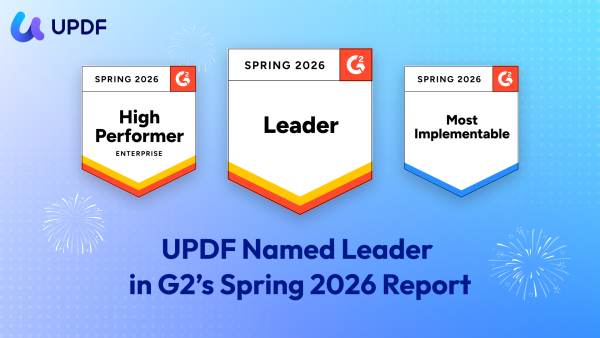
Superace Software’s UPDF has been named a Leader in the G2 Spring 2026 Report, also earning High Performer Enterprise and Most Implementable badges. With over 4 million users worldwide, UPDF provides an intuitive, AI-powered PDF solution designed to improve productivity and streamline workflows.
Hong Kong S.A.R., 20th Mar 2026 – Superace Software proudly announces that UPDF, its all-in-one AI PDF editor, has been named Leader in the G2 Spring 2026 Report. The product also received High Performer Enterprise and Most Implementable badges, reflecting its superior performance, enterprise readiness, and ease of adoption.
UPDF’s Progress Since its launch, UPDF has become a global favorite, attracting over 4 million users across personal, educational, and professional sectors. UPDF’s vibrant interface, versatile PDF features, and AI-powered enhancements—including automatic summarization, document chat, and smart PDF management—have helped it achieve rapid growth and industry recognition.
Achievements in G2 Spring 2026 Report:
Leader Badge: Celebrating outstanding satisfaction and market presence among PDF solutions.
High Performer Enterprise: Recognized for high usability and value in enterprise deployments.
Most Implementable: Noted for seamless integration and adoption across teams.
UPDF’s G2 accolades highlight its commitment to creating a user-friendly, AI-enhanced PDF tool capable of improving productivity and workflow efficiency.
UPDF Key Features:
PDF Editing: Modify text, images, and links easily.
AI Integration: Summarize, translate, and interact with PDFs intelligently.
OCR & Conversion: Extract and convert content from scanned PDFs.
Security Features: Protect documents with passwords or signatures.
Annotation Tools: Add notes, highlights, and comments anywhere.
Additional Tools: Compress, redact, and organize PDFs efficiently.
Available on Windows, Mac, iOS, and Android, UPDF supports four devices per account.
About G2: G2 is the world’s leading software review platform, trusted by millions of professionals to make data-driven software decisions. For more, visit http://www.g2.com.
About Superace: Superace Software Technology Co., Ltd. develops AI-powered PDF software, including editing, converting, and annotating tools. UPDF, its flagship product, focuses on combining robust functionality with a smooth, intuitive experience across platforms.
Address 2: BLDG 144-150 TAI LIN PAI ROAD KWAI CHUNG NT
City: Hongkong
State: Hongkong
Country:Hong Kong S.A.R.
Release id:42870
The post UPDF Earns Leader Badge in Spring 2026 Report appeared first on King Newswire. This content is provided by a third-party source.. King Newswire makes no warranties or representations in connection with it. King Newswire is a press release distribution agency and does not endorse or verify the claims made in this release. If you have any complaints or copyright concerns related to this article, please contact the company listed in the ‘Media Contact’ section
Australia, 20th Mar 2026 – TMR Gutter Replacement Brisbane Southside is proud to announce its continued commitment to delivering high-quality gutter installation, repair, and maintenance services across Brisbane’s southside. Known for reliability, craftsmanship, and customer-first service, the company has become a trusted name for homeowners and businesses seeking dependable solutions for their roofing and drainage needs.
With years of experience in the industry, TMR Gutter Replacement Brisbane Southside specializes in comprehensive gutter replacement Brisbane Southside services designed to protect properties from water damage, structural deterioration, and costly repairs. The company understands that properly functioning gutters are essential for safeguarding homes, particularly in regions like Brisbane where heavy rainfall can quickly expose weaknesses in outdated or damaged systems.
“Our mission is simple—deliver durable, efficient, and affordable gutter solutions that stand the test of time,” said a spokesperson for the company. “We take pride in helping our customers protect their homes while improving the overall appearance and value of their properties.”
TMR Gutter Replacement Brisbane Southside offers a full range of services, including gutter and roof repairs Brisbane Southside, ensuring that every aspect of a property’s drainage system is functioning optimally. Whether it’s fixing leaks, replacing rusted sections, or upgrading to modern gutter systems, the team provides tailored solutions to meet each client’s specific needs.
One of the company’s standout services is gutter repairs Brisbane Southside, which addresses common issues such as blockages, sagging gutters, corrosion, and storm damage. By using high-quality materials and advanced techniques, TMR ensures long-lasting repairs that prevent recurring problems and extend the life of the gutter system.
In addition to localized services, the company also caters to a wider audience with its expertise in gutter replacement Brisbane and gutter repairs Brisbane, making it a go-to provider for clients across the broader Brisbane area. This flexibility allows the business to support both residential and commercial projects, regardless of size or complexity.
What sets TMR Gutter Replacement Brisbane Southside apart is its dedication to customer satisfaction. From the initial consultation to project completion, clients receive transparent communication, detailed assessments, and honest recommendations. The team works efficiently while maintaining strict safety standards, ensuring minimal disruption to customers’ daily routines.
Another key advantage is the company’s use of premium-grade materials that are built to withstand Australia’s harsh climate conditions. By combining quality products with expert workmanship, TMR delivers results that not only perform well but also enhance the aesthetic appeal of properties.
The company also emphasizes preventative maintenance, helping customers identify potential issues before they escalate into major problems. Regular inspections and timely repairs can significantly reduce long-term costs, making TMR’s services a smart investment for property owners.
Located at 397 Hellawell Rd, Sunnybank Hills, TMR Gutter Replacement Brisbane Southside continues to serve the local community with professionalism and integrity. With a growing reputation for excellence, the company remains focused on innovation and continuous improvement to meet evolving customer needs.
About TMR Gutter Replacement Brisbane Southside TMR Gutter Replacement Brisbane Southside is a leading provider of gutter installation, repair, and maintenance services in Brisbane, Queensland. Specializing in residential and commercial projects, the company offers reliable solutions including gutter replacements, roof repairs, and drainage system upgrades. With a commitment to quality workmanship and customer satisfaction, TMR has established itself as a trusted name in the industry.






 Explore the Solicoin IEO