Doha, Qatar, 12th Jan 2026 – Gem Soft, a provider of messaging infrastructure, announces its all-in-one B2B platform Gem Team, addressing fragmented and insecure communication issues. Backed by Gem Soft’s expertise, Gem Team offers unified chat, voice, video, file sharing, and collaboration, secured with ISO 27001 compliance, multi-layer encryption, and data sovereignty via on-premise or cloud deployment.
Amid rising data breaches and regulations, Gem Team includes resilience features: air-gap deployment, granular controls, audit trails, and auto-deletion. Video supports up to 300 participants with screen sharing, call recording, and moderation tools. The user experience includes editable messages, real-time status, unlimited storage, and 24/7 support, depending on the package option.
Standout AI tools: embedded assistants, multi-agent systems, RAG pipelines, fine-tuned LLMs for enterprise tasks. Developed under an SSDLC with penetration testing, Gem Team serves GCC sectors like government, finance, healthcare, and Qatar Vision 2030 initiatives.
Gem Team provides security features and customizable AI for enterprise operations. It enables data sovereignty and innovation.
About the Company
Gem Team is an all-in-one B2B platform by Gem Soft that unifies chat, voice, video, file sharing, and collaboration, with strong security (ISO 27001, multi-layer encryption) and flexible deployment for data sovereignty (on-premise or cloud), plus built-in AI tools like assistants, RAG pipelines, and fine-tuned LLMs for enterprise tasks.
Johannesburg, South Africa – As South Africa’s finance and insurance sectors move into 2026, one reality is becoming increasingly clear: recruitment is no longer a support function. It is a material business risk.
In industries shaped by strict regulation, heightened performance pressure and reputational exposure, the cost of hiring mistakes has never been higher. For finance and insurance businesses, people are not only operational assets — they are the frontline of compliance, customer trust and brand credibility.
From contact centres and claims departments to sales, administration and support functions, the quality and reliability of talent directly underpin operational stability. In this environment, partnering with the right recruitment provider is no longer a “nice to have”; it is a strategic safeguard.
The Cost of Hiring Mistakes in High-Risk Environments
Unlike many other sectors, poor hiring decisions in finance and insurance carry layered and far-reaching consequences. A single underqualified or poorly vetted employee can trigger compliance breaches, customer complaints, financial losses and reputational damage that extends well beyond one role or department.
In 2026, these risks are amplified by:
Increased regulatory scrutiny and governance expectations
More informed consumers with lower tolerance for service failures
Intensifying pressure on contact centres to resolve issues faster and at scale
Persistently high turnover in entry-level, claims and sales roles
When turnover is high and roles are business-critical, rushed recruitment processes and overstretched internal teams create vulnerability. Hiring becomes reactive, screening quality declines and performance suffers.
Talent Shortages and Turnover Remain Ongoing Challenges
Finance and insurance organisations continue to compete for a limited pool of skilled, dependable talent, particularly in customer-facing and operational roles. Burnout, aggressive poaching and performance pressure have made retention as challenging as attraction.
Internal HR teams are often required to manage compliance, employee relations, performance management and recruitment simultaneously. This frequently results in delayed hiring, reduced screening depth and increased exposure to risk.
This is where a specialist recruitment partner delivers measurable value.
Why Internal Hiring Alone Is No Longer Enough
While internal recruitment teams remain essential, they are rarely structured for high-volume hiring, rapid turnaround or sustained talent pipelining — particularly in high-pressure, regulated environments.
A specialist recruitment agency provides:
Dedicated sourcing capacity
Pre-screened, role-ready talent pools
Industry-specific vetting and compliance processes
Speed without compromising on quality
Most importantly, a recruitment partner introduces accountability. Outcomes are measured, delivery is tracked and performance matters.
The Strategic Value of a Specialist Recruitment Partner
In finance and insurance, recruitment should actively reduce risk — not introduce it. A recruitment partner with deep sector expertise can anticipate challenges before they become operational issues.
The right partner does more than fill vacancies. They:
Understand compliance and governance requirements
Assess candidates beyond CVs, prioritising reliability, integrity and performance
Enable scalable hiring during peak demand periods
Offer staffing flexibility through contract, temporary and permanent placements
How Isilumko Staffing Supports Finance and Insurance Businesses
Isilumko Staffing partners with finance and insurance organisations to deliver recruitment solutions that prioritise quality, compliance and business continuity.
With proven experience in high-volume, regulated environments, Isilumko Staffing provides:
Comprehensive screening and vetting aligned with industry standards
Access to pre-qualified talent pools across contact centre, administration, claims and support roles
Flexible staffing models that adapt to changing business needs
Clear accountability and performance-driven delivery
Guided by values of ownership, integrity and exceptional performance, Isilumko Staffing operates as an extension of its clients’ businesses — not merely a supplier.
Recruitment as Risk Management in 2026
In 2026, finance and insurance organisations can no longer afford recruitment shortcuts. Talent decisions have a direct impact on compliance, customer trust and bottom-line performance.
Choosing a recruitment partner such as Isilumko Staffing is not about outsourcing hiring — it is about strengthening it. With the right partner in place, recruitment becomes a protective layer, enabling organisations to operate with confidence in an increasingly complex landscape.
For more information or to discuss your 2026 recruitment needs, please contact:
From Compliance Consensus to Industrial Implementation, Web3 Officially Enters a New Era of Large-Scale Applications
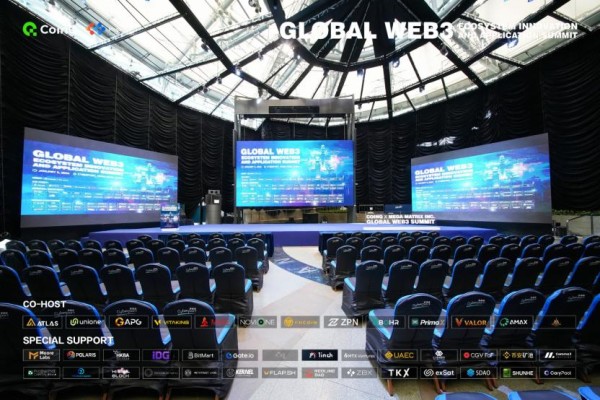
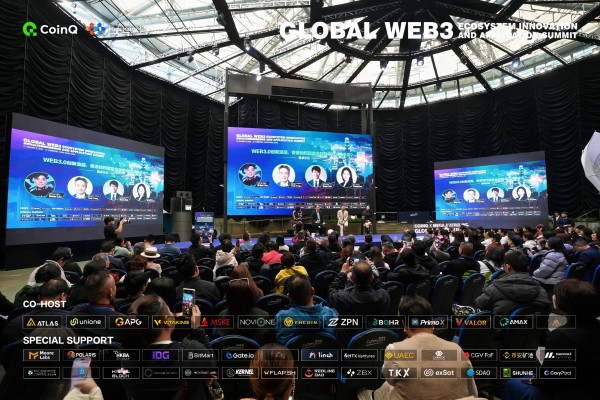
China, 12th Jan 2026 – On January 5, 2026, the “Global Web3 Ecosystem Innovation & Application Summit” was successfully held at Cyberport Hong Kong. On the day of the summit, Cyberport Hong Kong was bustling with crowds, creating a lively atmosphere. According to statistics, the on-site attendance exceeded a thousand people, attracting blockchain practitioners, investment institution representatives, exchange executives, technical developers, and media professionals from various countries and regions around the world, including China, Hong Kong, China, the United States, Vietnam, South Korea, Malaysia, Singapore, Thailand, Germany, and Dubai. Such a diverse international lineup fully demonstrates Hong Kong’s strong appeal as a global hub for Web3 innovation, as well as the summit’s extensive influence within the industry.
The event was co-hosted by CoinQ Exchange and U.S.-listed Mega Matrix Inc., with dozens of co-organizers including Atlas, UniOne, VITAKING, MSKE, NoviOne, FHCoin, ZPN, BOHR, and PrimoX. It received special support from over twenty top-tier industry institutions such as Moore Labs, Polaris, Hong Kong Blockchain Association (HKBA), BitMart, Gate, ABCDE Capital, 1inch Network, and HTX Venture. Core blockchain media outlets including ME, Planet Daily, Rhythm BlockBeats, Chain Catcher, PANews, and Foresight News provided in-depth coverage throughout the event, collectively witnessing this feast of intellectual exchange and resource networking.
From “Proof of Concept” to “Real World”: The Key Turning Point of Web3
The global digital economy is now entering a new phase of structural transformation. Blockchain and Web3 technologies are moving beyond their early ‘proof-of-concept’ stage, which was primarily driven by technical narratives, and are now addressing core issues such as compliance, efficiency, practical applications, and business sustainability. Against this backdrop, the Global Web3 Ecosystem Innovation and Application Summit holds significant contemporary relevance. With its core theme ‘Ecosystem Innovation × Practical Applications’, the event clearly signals a key industry trend: The next phase of Web3 competition will no longer focus on isolated technological breakthroughs, but rather on the contest of systemic industrial capabilities.
Important Speech and Speech, Outline the Clear Industrial Context
The opening address at the summit was delivered by Shi Yuhua, an investor at CoinQ exchange. His speech began with an analysis of the industry’s macro cycle, highlighting that Web3 is entering a new phase where compliance capabilities and ecosystem synergy are at the core.
Subsequently, Colin Butler, founder of Mega Matrix Inc. (NASDAQ: MPU), elaborated on the practical logic of how Web3 technology is progressively integrated into mainstream business and financial frameworks from the perspectives of listed companies and global capital markets. This further reinforced the developmental path of Web3 and traditional financial systems, emphasizing their ‘integration rather than opposition.’
Key industry representatives from Hong Kong also contributed practical institutional and industrial insights to the summit. Thomas Cheung, former National People’s Congress deputy from Hong Kong and partner of Hong Kong Innocent Angel Fund, MH JP
Huo Yuhui, Vice President of the Hong Kong Blockchain Association, elaborated on Hong Kong’s distinctive advantages in the global Web3 landscape, covering policy environment, industrial ecosystem maturity, and international connectivity capabilities.
RWA and Compliance Finance: From Hot Topics to Practical Path
Among all topics, RWA (Real-World Assets on the Chain) was undoubtedly one of the most highly discussed areas at this summit. Tony Tong, CEO of UAEC Dena Trust and founder of HKBA, delivered a presentation on ‘RWA Development Strategies in the Context of Global Compliance Trends,’ which was praised by multiple institutional representatives as ‘both forward-looking and actionable.’ The core argument is that RWA is not merely about digitizing assets, but a systemic endeavor involving legal frameworks, custody mechanisms, clearing systems, and cross-border compliance coordination. This assessment closely aligns with the observations of multiple institutional investors at the conference, further confirming that RWA is transitioning from conceptual discussions to a stage of scalable implementation.
Roundtable Forum: How Hong Kong Empowers the New Global Web3 Order
The roundtable forum, moderated by Brian Lau—partner at Market Across and ambassador for Solana and Binance—featured insights from institutions including Mega Matrix, Gate, BitMart, and Solana. These discussions underscored the accelerating convergence of technology with traditional sectors like finance, entertainment, and mining, emerging as a pivotal hub for intellectual exchange at the summit. Participants widely acknowledged that Hong Kong is evolving into a unique nexus bridging regulation, capital, and technological innovation, positioning it to serve as a “institutional infrastructure” in the future global Web3 landscape.
Project Roadshow: Real Application Becomes Core Competitiveness
A series of Web3 projects showcased their real-world industrial applications. Innovations like BOHR, ZPN privacy public chain, MSKE inscription, NoviOne payment solution, VITAKING’s gold mining asset tokenization, and Unione’s StoreFi ecosystem took turns to demonstrate Web3’s commercial potential across diverse verticals. Keywords such as’ verifiable computing power, ” entertainment RWA, ‘and’ stablecoin payments’ drew significant on-site attention. Meanwhile, the exhibition showcased projects spanning multiple Web3 sectors including cultural and entertainment industry RWA, privacy-focused public chains, inscription ecosystems, stablecoin payments, StoreFi, and DeFi infrastructure, clearly demonstrating the emergence of a multi-tiered and collaborative industrial ecosystem in Web3.
Web3 officially enters the era of application-driven from Hong Kong
In summary, this Global Web3 Ecosystem Innovation and Application Summit transcends being merely a showcase of technologies or projects—it has evolved into a platform for the industry to collectively articulate its shared vision. As compliance becomes the prerequisite, application the core, and ecosystem the key, Web3 is rapidly entering a new phase with more tangible anchors and enduring value logic. Leveraging its institutional strengths, global connectivity, and industrial foundation, Hong Kong is steadily establishing itself as a strategic pivot in the global Web3 landscape.
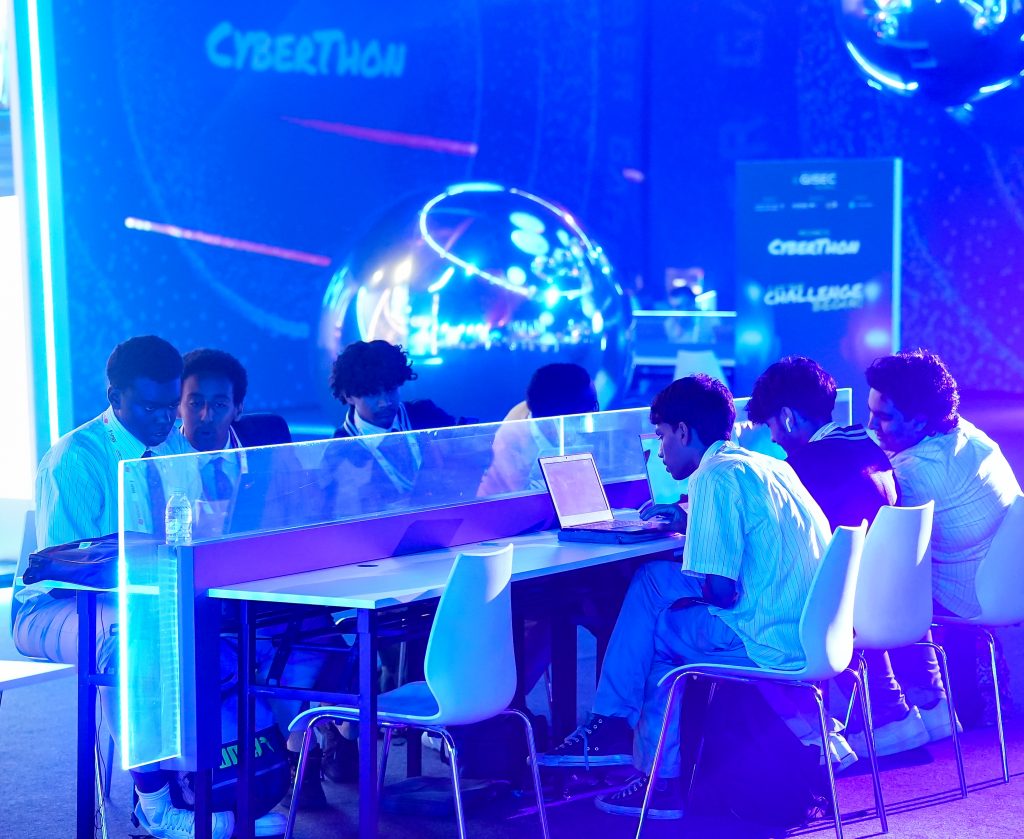
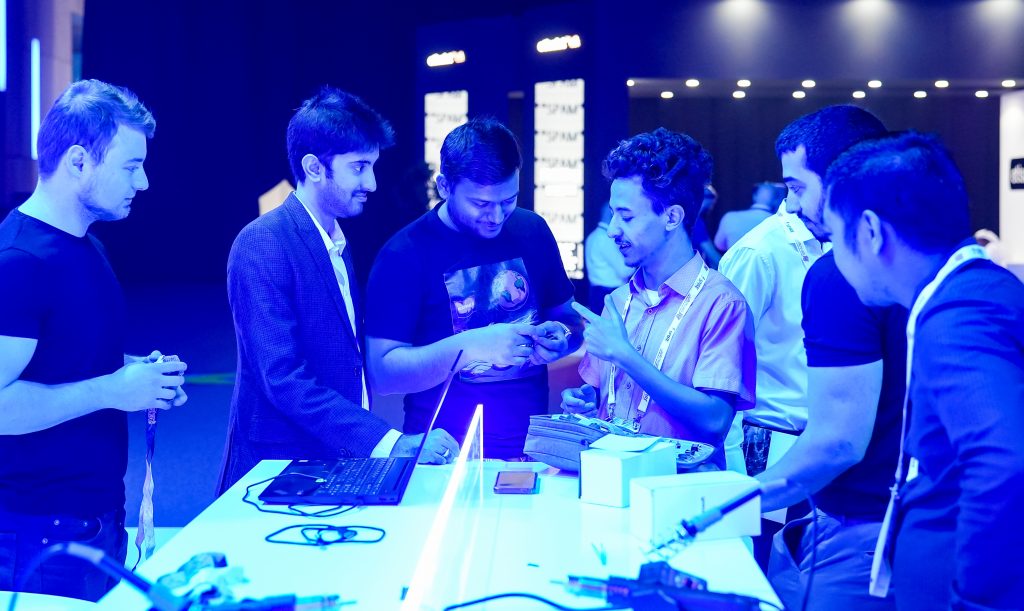
Dubai, United Arab Emirates, 12th January 2026, ZEX PR WIRE, GISEC Global, the Middle East and Africa’s leading cybersecurity event, will participate in the Cyber Run & Ride, a community-led initiative taking place in Abu Dhabi on 17–18 January 2026, reinforcing the importance of cyber awareness beyond the workplace and into everyday life.
Hosted by the Abu Dhabi Sports Council and sponsored by the UAE Cybersecurity Council, the Cyber Run & Ride combines running and cycling activities with a broader mission to promote healthy lifestyles while raising awareness around technology, digital responsibility, and online safety. The event brings together professionals, families, fitness enthusiasts, and the wider community in a shared commitment to safer digital behaviour.
GISEC Global’s participation reflects its belief that cybersecurity awareness must extend beyond boardrooms, policies, and technical forums and become embedded within society and culture. By supporting initiatives such as the Cyber Run & Ride, GISEC continues to advocate for a holistic approach to cyber resilience, where individuals play an active role alongside governments and organisations.
“Cybersecurity is no longer a niche or purely technical concern. It affects how we live, work, and connect every day,” said Alex Nicholl, Vice President, New Industries, at Dubai World Trade Centre. “By taking part in initiatives like the Cyber Run & Ride, GISEC Global is helping to bring cyber awareness into the community, reinforcing that digital safety starts with informed individuals and collective responsibility.”
Participants at the event will be able to take part in running races on 17 January across multiple distances, including half-marathon, 10km, 5km, and 2.5km, while cycling participation will be offered in a non-timed format on 18 January. To register and find out more about the routes, go here.
They will also be encouraged to engage with cyber awareness activities that highlight practical steps individuals can take to protect themselves online, from safe password practices to recognising digital threats. The initiative underscores how small, informed actions can contribute to broader digital resilience.
The Cyber Run & Ride aligns closely with GISEC GLOBAL’s wider mission to serve as a platform for collaboration across the cybersecurity ecosystem. From global policy discussions and technical innovation to public-facing awareness initiatives, GISEC continues to support efforts that strengthen cyber preparedness at every level of society.
GISEC Global will next convene the international cybersecurity community at GISEC Global 2026, taking place from 5–7 May 2026 at Dubai Exhibition Centre (DEC), Expo City Dubai, bringing together global leaders, innovators, and decision-makers to address the most pressing cyber challenges shaping the digital future.
About Dubai World Trade Centre (DWTC):
A global business facilitator since 1979, Dubai World Trade Centre (DWTC) is home to the region’s leading purpose-built convention and exhibition centre. DWTC provides a platform for connecting people, products, innovation and ideas from around the world through a dynamic calendar of international trade exhibitions and its own roster of sector-leading mega events. As a designated free zone, complemented by award-winning commercial real estate, DWTC plays an integral role in Dubai and the region’s growth story. Since its inauguration, DWTC has hosted over 6,000 events, with an estimated economic output of AED 248 billion, attracting over 38 million business visitors to Dubai.
Building on this legacy, DWTC’s second flagship venue, the Dubai Exhibition Centre (DEC), stands as a premier destination for prominent national and international mega events. Strategically aligned with the Dubai 2040 Urban Master Plan, DEC’s recently announced AED 10 billion expansion is integral to Expo City Dubai’s vision of becoming a global business hub for exhibitions and events.
The Power Beauty Collab brings a curated shelf of clean beauty products to Shobha’s innovative hair removal studios in NYC (Soho) and Washington DC (Dupont Circle), expanding their footprint across the U.S.
Palm Springs, CA, United States, 12th Jan 2026 – The Power Beauty Collab expands again with a partnership with Shobha’s innovative hair removal studios, starting with Shobha Soho and Shobha Dupont Circle.
The Power Beauty Collab is a group of over 65 indie beauty & wellness brands led by MASAMI haircare. The PBC creates co-marketing campaigns to help each other grow and one of the major initiatives is retail “pop-ins” – shelves of 6 -15 clean beauty brands. The Power Beauty Collab seeks like-minded partners like Shobha who have customers interested in discovering clean beauty & wellness and curate a bespoke collection of products that fit their audience.
Shobha Tummala immediately sparked to the concept. She says, “We’re passionate about supporting other small businesses. This partnership is exciting as it introduces high performing products to our customers that they otherwise might not know about. Our customers love trying new things.”
Product discovery is at the core of the Power Beauty Collab strategy – the brands have found that once people try their products, they come back for more. “Shobha makes a ton of sense for us. They have great locations, a breadth of beauty services, beautiful stores and a welcoming staff – all of the ingredients we look for in a successful partnership,” says Lynn Power, founder of the Power Beauty Collab.
Brands participating in the Shobha pop-ins include Boston Mints, Corsica Scents, Innersoul Beauty, Isle de Nature, Lunaescent, MASAMI, Noori, Olecea Beaute, SBeauty+ and Viking Beauty Secrets.
Shobha joins other successful on-going Power Beauty Collab pop-ins across the US:
Remedies Herb Shop in Brooklyn, NY
Palm Springs Vitamin Infusions
Petal + Hive in Saratoga Springs Spa, NY
KLARA Beauty Lab in NYC
ADAMO Day Spa in Scituate, MA
Atlas Store in LA’s Century City & Valley Fair in Santa Clara, CA
Life Essentials Refillery in Tampa, FL
For more information on the PBC pop-ins, contact Lynn Power, lynn@lovemasami.com, 917-209-0799.
For more information about Shobha, contact Shobha Tummala at thoughts@myshobha.com and follow them on Instagram @myshobha and online, www.myshobha.com
About the Power Beauty Collab:
The Power Beauty Collab is THE place to discover new indie beauty and wellness brands. Follow us on Instagram @powerbeautycollab or check out our brands online at https://www.powerbeautycollab.com
About MASAMI:
MASAMI is clean premium haircare infused with Mekabu, a Japanese ocean botanical that’s all about weightless hydration. MASAMI’s line consists of shampoo, conditioner, shine serum, styling cream, a sustainable fast drying hair towel and a scalp scrubber. Learn more at lovemasami.com and follow us @lovemasamihair.
The post The Power Beauty Collab launches a partnership with Shobha appeared first on King Newswire. This content is provided by a third-party source.. King Newswire makes no warranties or representations in connection with it. King Newswire is a press release distribution agency and does not endorse or verify the claims made in this release. If you have any complaints or copyright concerns related to this article, please contact the company listed in the ‘Media Contact’ section
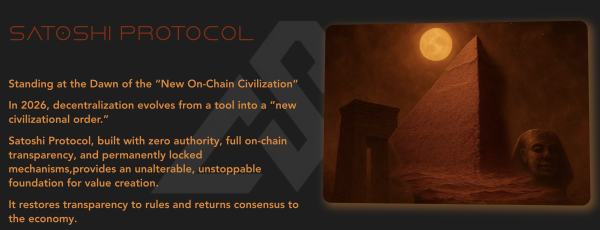
In the grand evolution of the digital economy, 2026 is prophesied by Satoshi Protocol as a pivotal moment when decentralization transcends a mere technical tool to become a “new civilizational order” . Satoshi Protocol emerges precisely at this historical juncture, with the ambitious vision of building a zero-authority, fully on-chain transparent, and permanently locked infrastructure, providing an unalterable, unstoppable cornerstone for value creation in the on-chain world . It is dedicated not only to restoring transparency to digital rules but also to reinjecting the power of consensus into the economic system, thereby becoming the undisputed value creator in the “On-Chain Civilization Era” .
Satoshi Protocol’s Core Philosophy and Disruptive Vision
The founding of Satoshi Protocol stems from a profound and unique insight into the decentralized future. It goes beyond the traditional blockchain project’s focus on technical implementation, viewing decentralization as an entirely new form of social and economic organization. To this end, Satoshi Protocol steadfastly adheres to the following three core principles, which collectively form the bedrock of its disruptive vision:
1. Zero Authority: The Ultimate Manifestation of Decentralization
The core of Satoshi Protocol’s design philosophy lies in its “zero authority” characteristic . This means that the protocol’s operation does not rely on any centralized management body, individual, or entity. All decisions and executions are automatically completed through pre-set code logic and community consensus, thereby completely eliminating single points of failure and rent-seeking opportunities present in traditional financial systems. This extreme decentralization ensures the protocol’s independence, censorship resistance, and fairness to all participants, truly realizing the highest ideal of “code is law.”
2. Full On-Chain Transparency: The Cornerstone of Trust
“Full on-chain transparency” is the fundamental basis for Satoshi Protocol to build trust . Every transaction, every state change, and every mechanism parameter within the protocol is publicly recorded on the blockchain, available for anyone to review and verify at any time. This unparalleled transparency eliminates information asymmetry, allowing all participants to clearly understand how the protocol operates and how funds flow, thereby building a trust environment that does not require reliance on third parties. In the world of Satoshi Protocol, trust is no longer based on personal relationships or institutional endorsements, but on publicly verifiable code and data.
3. Permanently Locked Mechanisms: Eternal Guarantee of Value
Satoshi Protocol provides an unbreakable guarantee for on-chain value creation through its “permanently locked mechanisms” . This refers not only to the immutability of smart contracts but, more profoundly, to the structural locking of its key economic mechanisms and liquidity pools. Once deployed, these mechanisms cannot be modified or revoked by any party, thus providing the highest level of assurance for the protocol’s long-term stable operation and user asset security. This permanence eliminates uncertainty, providing a solid foundation for user participation and value accumulation.
These three principles mutually support each other, collectively shaping Satoshi Protocol’s unique ecosystem, enabling it to truly achieve the grand goal of “Let Code Govern Value” .
Mechanism-Driven Growth Engine: SPR’s Automated Value Cycle
Satoshi Protocol’s innovation also lies in its unique “Mechanism-Driven Growth Engine,” an automated value cycle system achieved through Auto-Market-Making and Auto-Compounding . This system is at the core of Satoshi Protocol’s economic model, designed to achieve sustainable growth without human intervention.
1. Auto-Market-Making
Traditional market makers require manual operations and strategy adjustments, making them susceptible to emotions and market manipulation. Satoshi Protocol, through its built-in auto-market-making mechanism, ensures the automation of liquidity and price discovery for the SPR token in the market. This means that regardless of market conditions, SPR transactions can proceed smoothly, reducing slippage and providing users with an efficient trading experience. This automated market-making mechanism eliminates human intervention, making market behavior purer and more efficient .
2. Auto-Compounding
Compounding is a powerful force for wealth growth, but in traditional finance and many DeFi protocols, compounding operations often require users to manually execute them or rely on complex third-party aggregators. Satoshi Protocol automates the compounding process, allowing users’ earnings within the protocol to be automatically reinvested, thereby achieving exponential growth of assets. This “auto-compounding” not only simplifies user operations and lowers the barrier to entry but, more importantly, it tightly links the protocol’s growth with users’ long-term interests, forming a positive feedback loop .
3. Fully Automated Value Cycle: The Life Cycle of SPR
Satoshi Protocol has achieved a high degree of automation throughout the entire life cycle of the SPR token—from purchasing, providing liquidity, compounding, to eventual redemption. This “fully automated value cycle” completely eliminates the possibility of human intervention, thereby fundamentally preventing potential market manipulation . The protocol’s growth is no longer subject to market sentiment fluctuations but is driven by its meticulously designed internal structure, ensuring the robustness and predictability of its development .
Black-Hole Liquidity: A New Paradigm for DeFi Security
In the DeFi space, “rug pulls” have long been a persistent problem plaguing users and industry development. Satoshi Protocol addresses this pain point by innovatively introducing the “Black-Hole Liquidity” mechanism, setting a new paradigm for DeFi security .
1. Permanent Locking of SPR/USDT LP
According to Satoshi Protocol’s design, all SPR/USDT LP (Liquidity Provider tokens) are automatically sent and locked into a special “black-hole address” . This address is a publicly transparent smart contract address that cannot be controlled by any private key. Once LP tokens enter this “black hole,” they cannot be withdrawn, moved, or altered in any way. This means that even the protocol’s developers cannot access or transfer this liquidity.
2. Structural Prevention of “Rug Pulls”
This permanent locking mechanism fundamentally solves the “rug pull” problem. Because core liquidity is irreversibly locked, malicious actors cannot manipulate the market or abscond with user funds by withdrawing liquidity. This provides a truly permanent safety layer for Satoshi Protocol users, allowing them to participate in the protocol with confidence, without worrying about liquidity being suddenly removed .
3. Value Anchor and Long-Term Moat
This “black hole” is not only a technical safeguard against “rug pulls” but also serves as a solid anchor for Satoshi Protocol’s value . It symbolizes the protocol’s commitment to long-term stability and user security. At the same time, this unique liquidity structure also builds a long-term “moat” for the protocol, giving it a distinct competitive advantage in the fiercely competitive DeFi market and attracting more participants who trust decentralization and transparent mechanisms .
Conclusion: Code Governs Value, Co-creating the On-Chain Future
Satoshi Protocol is more than just a decentralized protocol; it is a declaration for the future digital world. Through its zero-authority, fully on-chain transparent, and permanently locked mechanism architecture, coupled with its revolutionary automated growth engine and black-hole liquidity, Satoshi Protocol is laying a solid foundation for a “new on-chain civilization.” It embodies the concept of “Let Code Govern Value” through practical actions, painting a grand and hopeful blueprint for the future of decentralized finance. As Satoshi Protocol continues to evolve, we have every reason to believe that a more fair, transparent, and efficient era of on-chain value creation is accelerating its arrival .
Why Rationalizing Short-Term Decisions Undermines Trust, Governance, and Long-Term Value
New Jersey, US, 12th January 2026, ZEX PR WIRE, In a new leadership commentary, executive strategist Frank Okunak is challenging a widely accepted but rarely discussed practice inside many organizations: the use of plausible deniability to rationalize decisions that leaders know are ethically questionable, financially misleading, or strategically shortsighted.
According to Okunak, plausible deniability often emerges not through overt misconduct, but through quiet justification. “It shows up when executives tell themselves, ‘We’ll fix it next quarter,’ or ‘This lifts the bonus plan now and we’ll true it up later,’” he explains. “The problem is that intent matters just as much as mechanics.”
Drawing on decades of experience across finance, operations, and corporate governance, Okunak describes a pattern in which leaders knowingly take actions that distort performance in the short term while relying on future adjustments to offset the impact. Common examples include manipulating accruals to meet quarterly targets, signing representation letters while aware of aggressive accounting treatments, or parking intercompany balances on the balance sheet until results improve.
“These decisions are often technically defensible in isolation,” Okunak notes. “But when taken together, they represent a breakdown in accountability. Leaders may not say the words out loud, but they understand exactly what they are doing.”
Okunak also points to extraordinary events such as the COVID-19 pandemic as moments when plausible deniability becomes especially tempting. “Crisis creates cover,” he says. “It allows organizations to bundle legitimate write-offs with unrelated management mistakes, inefficiencies, or bad decisions, all under the umbrella of an external event. Over time, that erodes transparency and trust.”
At the center of Okunak’s critique is the gap between formal compliance and ethical responsibility. He argues that many executives hide behind process, delegation, or technical standards to avoid confronting the intent behind their decisions. “Signing a representation letter while knowing the numbers were engineered to hit a target is not a process failure,” he says. “It’s a leadership failure.”
Okunak emphasizes that plausible deniability is dangerous precisely because it feels reasonable at the moment. Bonuses, incentive plans, market expectations, and investor pressure all contribute to a culture where short-term outcomes are rewarded and long-term consequences are deferred.
“Organizations don’t lose credibility overnight,” Okunak explains. “They lose it one rationalized decision at a time.”
The commentary calls for a renewed focus on moral clarity in executive decision-making particularly in finance, accounting, and performance management. Okunak urges boards, audit committees, and senior leaders to look beyond technical compliance and ask harder questions about intent, timing, and transparency.
“Good governance isn’t just about whether something can be justified,” he says. “It’s about whether it should be done at all.”
Okunak believes that addressing plausible deniability head-on is essential for restoring trust in corporate leadership. Organizations that fail to confront these gray zones, he warns, risk not only reputational damage but long-term strategic fragility.
“Leadership is tested not when the numbers are easy,” Okunak concludes, “but when pressure tempts you to explain away what you already know is wrong.” I have made mistakes and bad decisions along the way but I find it funny or let’s just say hypocritical that so many Executives point fingers and call out others when three fingers are pointing back at them.
About Frank Okunak
Frank Okunak is an executive strategist with decades of experience in finance, operations, and organizational leadership. He advises companies and senior leaders on governance, accountability, and long-term value creation, with a focus on aligning strategy, ethics, and performance.
The Church of Scientology of Los Angeles held a Winter Community Event for East Hollywood families to welcome the New Year.
Los Angeles, California, 12th January 2026, ZEX PR WIRE, Rain forecast for the first week of the year was no stop for the Church of Scientology Los Angeles, who welcomed the New Year with a Winter Festival for the community held on January 1, featuring family-friendly activities and fun for children of all ages.
All activities were held indoors, allowing families to stay warm and cozy. There was no shortage of fun, with a sing-along concert, a bubble show, arts and crafts, face painting, and more.
Scientology founder L. Ron Hubbard wrote in his book The Way to Happiness: “Today’s children will become tomorrow’s civilization.”
Guided by this principle, the Church of Scientology Los Angeles creates family-friendly events throughout the year where the community can come together and children can enjoy a wide variety of activities in a safe space.
This festival marks the beginning of a new year, and families and members of the community are invited to attend future community events held throughout the year on L. Ron Hubbard Way.
In addition to special events, anyone curious to learn more about Scientology and the Church’s community assistance programs is welcome to visit at any time.
The Church of Scientology of Los Angeles was dedicated by Scientology ecclesiastical leader Mr. David Miscavige in 2010. It is designed to provide the ideal facilities for Scientologists on their ascent to higher states of spiritual freedom and to serve as a home for the entire community and a meeting ground of cooperative effort to uplift people of all denominations.
Germany, 12th Jan 2026 – In the fast-paced world of cryptocurrency and decentralized finance, visibility can make or break a new token project. Understanding this critical need, a groundbreaking platform has emerged to help Solana-based projects gain the traction they deserve. www.solspread.net introduces an innovative approach to professional volume generation, offering token creators and project teams a reliable way to boost their presence across multiple decentralized exchanges through their cutting-edge Solana Volume Bot technology.
The Challenge Facing New Token Projects
Launching a new token on the Solana blockchain comes with inherent challenges that many project founders quickly discover. Even with a solid use case, talented development team, and genuine community support, new tokens often struggle to gain initial visibility in an increasingly crowded marketplace. The problem is straightforward yet frustrating: without visible trading activity, potential investors and community members overlook promising projects, assuming they lack legitimacy or interest.
This chicken-and-egg situation has plagued the cryptocurrency space for years. Traders want to see activity before they commit their funds, but activity requires traders. The result is that countless innovative projects never get the chance to prove their worth, simply because they cannot break through the initial visibility barrier.
Traditional methods of generating interest have proven time-consuming, expensive, and often ineffective. Manual trading campaigns require significant resources and expertise, while many existing solutions produce obviously artificial patterns that can actually harm a project’s reputation rather than help it.
Introducing a New Standard in Volume Generation
The team behind Solana Volume Bot recognized this gap in the market and set out to create something different. Their platform represents a fundamental shift in how token projects can approach the visibility challenge, combining sophisticated technology with user-friendly implementation.
What sets this solution apart from alternatives is its focus on organic-looking activity. Rather than producing the obvious, pattern-based trading that characterizes many volume generation tools, the platform employs advanced algorithms that create natural trading behavior. Variable timing, randomized amounts, and distributed wallet activity combine to produce activity patterns that mirror genuine market interest.
Comprehensive Multi-DEX Support Drives Adoption
One of the most compelling features of the platform is its extensive integration with major Solana decentralized exchanges. Rather than limiting projects to a single marketplace, the volume generation service supports six prominent platforms: Pump.fun, Raydium, Jupiter, Orca, DexScreener, and Bonk.fun.
This multi-DEX approach offers significant advantages for token projects. By distributing activity across multiple platforms, projects can reach different segments of the Solana trading community while creating a more realistic footprint. The broader visibility also increases the chances of appearing on trending lists and attracting organic trader interest.
“The Solana ecosystem is incredibly diverse, with traders having strong preferences for different DEX platforms. A volume solution that only works on one exchange misses the bigger picture. Projects need to be visible wherever their potential community members are trading.”— Marcus Chen, Industry Analyst
How the Platform Works
The platform has been designed with accessibility in mind, recognizing that not all project founders have deep technical expertise. The entire process can be completed in just four steps:
Wallet Connection
Users connect their Solana wallet through popular options including Phantom, Solflare, or Backpack. This familiar process takes just moments and requires no special technical knowledge.
Campaign Configuration
The heart of the platform allows users to customize every aspect of their volume campaign. Project teams specify their token address, target volume, campaign duration, and engagement settings including distributed wallets up to 10,000+.
Payment and Confirmation
With a transparent pricing model, users pay a straightforward 2% service fee on the total volume generated. Payment is processed in SOL with immediate confirmation.
Monitoring and Analytics
Once launched, campaigns can be tracked through the real-time analytics dashboard with live statistics, volume tracking, and comprehensive reporting.
Advanced Features That Make the Difference
Beyond the core volume generation functionality, the platform includes several advanced features that contribute to its effectiveness and set it apart from competitors in the market.
Key Platform Features
Distributed Wallet Technology — Utilizes up to 10,000+ unique wallets for natural trading patterns
Smart Trading Patterns — Advanced algorithms with variable timing and diverse transaction amounts
Social Engagement Integration — Automated comments and favorites for additional credibility
Transparency in pricing has been a cornerstone of the platform’s approach. Unlike competitors that charge anywhere from 10% to 20% of generated volume, www.solspread.net maintains a straightforward 2% service fee.
This pricing model scales logically with campaign size. A 100 SOL volume campaign incurs just 2 SOL in fees, while a 500 SOL campaign costs 10 SOL, and a 1,000 SOL campaign requires only 20 SOL in fees. The absence of hidden costs or additional charges has been particularly appealing to project teams working with limited marketing budgets.
Looking Ahead: The Future of Token Visibility
As the Solana ecosystem continues to grow, the need for effective visibility solutions will only increase. The team behind the platform has indicated that additional DEX integrations are in development, ensuring that users will have access to even broader market reach in the future.
The cryptocurrency industry has matured significantly in recent years, and the tools available to project teams have evolved accordingly. Professional volume generation, when executed properly, represents a legitimate marketing strategy that helps promising projects overcome the initial visibility hurdle that has historically limited innovation.
For token creators and project teams looking to give their work the attention it deserves, the platform offers a compelling combination of sophisticated technology, user-friendly design, and transparent pricing. In a market where first impressions matter enormously, having the right tools can make all the difference between a project that gains momentum and one that fades into obscurity.
San Ramon, CA, 12th January 2026, ZEX PR WIRE, For many first-time buyers, purchasing a home in the Bay Area can feel out of reach. Tight inventory, fast-moving deals, and rising costs make the process overwhelming. Ryan Weible of San Ramon, a Partner at the Leah Tounger Realty Group, is helping clients break through those barriers with a clear, step-by-step approach grounded in preparation, communication, and local insight.
A Bay Area native with a background in education and the arts, Weible combines people-first values with real estate knowledge to serve buyers who need structure and support during high-stakes decisions. In just his first year in the industry, he closed 12 transactions and built a reputation for helping new buyers stay focused and informed throughout the homebuying process.
“Many of my clients are first-time buyers who don’t come from families with real estate experience,” said Weible. “They’re smart and capable, but no one’s shown them how this works. That’s where I come in.”
Weible joined the Leah Tounger Realty Group in 2024, working under the KW Advisors East Bay brokerage. The team is one of the top-producing groups in the region, with more than $76 million in closed volume in the past year. The team focuses on Oakland, Berkeley, San Ramon, and surrounding East Bay cities.
Weible’s approach begins with listening. From the first consultation, he works to understand his clients’ goals, timelines, financial readiness, and decision-making styles. He builds a plan that breaks the homebuying process into manageable steps—often including lender introductions, neighborhood research, and customized timelines for education and touring.
“People don’t need hype. They need clarity,” Weible said. “I give them a structure so they know what’s coming next and where their energy should go.”
As a San Ramon resident, Weible brings local knowledge to each transaction. He helps buyers weigh tradeoffs between neighborhoods, compare schools, navigate traffic patterns, and assess long-term investment potential. His guidance helps clients stay grounded in both their budget and their values.
Before entering real estate, Weible spent over 20 years in education, leadership, and the performing arts. He served as Assistant Head of School at Bentley School, directed theatre programs across the region, and taught courses in communication and community engagement. He also led safety programs, staff development, and inclusion work in K-12 settings—experience that now translates into careful preparation and patient pacing for his real estate clients.
His past roles taught him to manage pressure, guide group decision-making, and help people stay calm through unfamiliar situations. That training is now a strength when helping buyers handle bidding wars, inspections, or escrow deadlines.
“My job is to hold the space and make the next step clear. That’s what I did in schools, that’s what I do now.”
Weible also operates Hit The Mark Realty and contributes to community resources through Emeryville. Real Estate, a site that offers local listings and real estate education. He partners with KW Advisors East Bay for brokerage services and is licensed throughout California.
He brings a calm, affirming presence to each deal. Many of his clients are navigating more than market pressure—they may be buying solo, relying on gifts or grants, or trying to move from rent to ownership without generational wealth behind them. Weible focuses on access and inclusion by creating an experience where all questions are welcome and no one is left guessing.
“I’ve worked with teachers, nonprofit staff, artists, and healthcare workers—people who give so much but often feel shut out of ownership. We work together to get them there.”
In a competitive market like San Ramon, he emphasizes preparation over perfection. His clients often win homes by being ready early, submitting clean offers, and moving fast—but never recklessly.
“I don’t push urgency. I teach readiness.”
Looking ahead, Weible plans to expand first-time buyer services with group workshops, free planning calls, and a written guide tailored to East Bay buyers. He is also developing partnerships with local lenders and credit unions to streamline access to financing options.
Whether buyers are weeks or months from making an offer, Weible encourages them to start with a conversation.
“You don’t have to know everything. You just need someone who will walk the path with you.”